
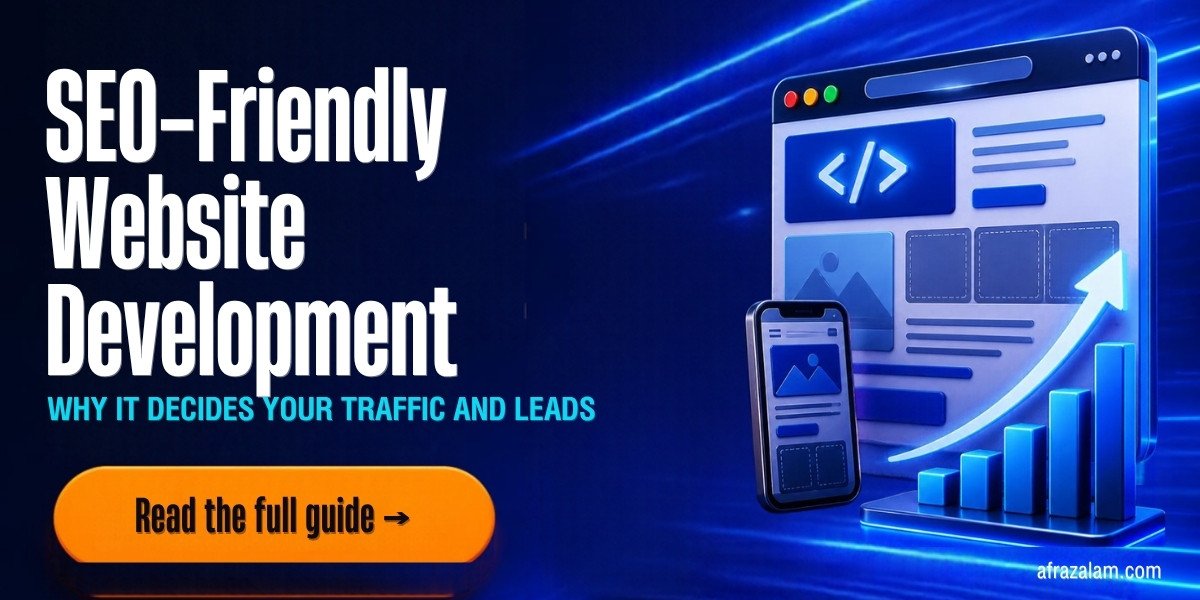
In today's digital landscape, SEO-friendly website development having a visually appealing website is no longer enough. Your website is the core of your digital presence and the ultimate destination for all your marketing efforts. Whether you're running paid ads, social media campaigns, or email marketing, your goal is to drive users back to your site to convert.
This is where SEO-friendly website development comes into play. If your website is slow, difficult to navigate on mobile devices, or impossible for search engines to crawl, your marketing ROI will suffer drastically.

Why SEO-Friendly Website Development Matters
SEO-friendly website development is the process of building websites that are optimized for search engines right from the start. Instead of treating SEO as an afterthought, it integrates technical and structural elements into the development phase itself.
If your website is slow, difficult to navigate on mobile devices, or poorly structured, your marketing ROI will suffer significantly. Studies show that users expect a website to load within seconds, and even a small delay can lead to high bounce rates.
Additionally, search engines prioritize websites that deliver a seamless user experience. This means that without proper optimization, even the most visually stunning website may struggle to rank on search engine results pages (SERPs).
What Makes a Website SEO-Friendly?
An SEO-friendly website is built with a strong technical foundation and optimized content structure. Here are the core pillars that define it:
1. Fast Loading Speeds
Website speed is a critical ranking factor. Search engines consider performance metrics like Core Web Vitals to evaluate user experience. A site that takes longer than three seconds to load can lose up to 40% of its visitors.
Optimizing images, minimizing code, using caching, and leveraging content delivery networks (CDNs) are essential steps to improve loading times.
2. Mobile Responsiveness
With mobile-first indexing, search engines primarily use the mobile version of your website for ranking. This makes mobile responsiveness non-negotiable.
A responsive website adapts seamlessly to different screen sizes, ensuring a consistent user experience across devices. Poor mobile design not only frustrates users but also negatively impacts rankings.
3. Clean Code and Architecture
Search engines rely on clean, well-structured code to crawl and index your website effectively. A clear site architecture with logical URL structures helps both users and search engines navigate your content easily.
Using proper HTML semantics, structured data, and organized navigation enhances the overall accessibility and SEO performance of your website.
4. Optimized On-Page Elements
On-page SEO elements such as headings (H1, H2, H3), meta descriptions, alt tags, and keyword placement play a crucial role in improving visibility.
By integrating these elements directly into your content management system (CMS), you ensure that every page is optimized for both search engines and users.
5. Secure and Accessible Website
Security is another important ranking factor. Websites using HTTPS are considered more trustworthy by both users and search engines.
Additionally, features like XML sitemaps and robots.txt files help search engines understand which pages to crawl and index, improving overall visibility.
“A beautiful website that search engines can’t find is like a billboard hidden in a basement.”
How Technical SEO Impacts Lead Generation
One of the biggest mistakes businesses make is treating web development and SEO as separate processes. They often build a website first and attempt to “add SEO” later. This approach is inefficient and can lead to missed opportunities.
Technical SEO should be integrated into the development process from the beginning. It includes elements such as:
- Site speed optimization
- Mobile usability
- Secure connections (HTTPS)
- XML sitemaps
- Canonical tags
- Crawlability and indexing
When these elements are properly implemented, search engines can easily crawl and understand your website. This improves your rankings and brings in high-intent, targeted traffic.
And here’s where the real impact happens: when users land on a fast, user-friendly website, they are far more likely to take action—whether it’s filling out a form, making a purchase, or contacting your business.
The Intersection of UX and SEO
User Experience (UX) and SEO are no longer separate disciplines—they are deeply interconnected. Search engines have evolved to prioritize websites that provide real value to users.
Metrics such as bounce rate, time on page, and engagement levels are signals that indicate whether users find your content useful. If visitors leave your site quickly, search engines interpret this as a sign that your website is not meeting user expectations.
By focusing on UX, you automatically enhance your SEO performance. Key UX elements include:
- Intuitive navigation
- Clear calls-to-action (CTAs)
- Fast-loading pages
- Readable typography
- Logical content structure
A well-designed user experience keeps visitors engaged, encourages them to explore more pages, and increases the likelihood of conversion.
Web Development as a Marketing Investment
Many businesses still view web development as a one-time technical expense. In reality, it is one of the most important long-term investments in your digital marketing strategy.
A well-optimized website:
- Improves search engine rankings
- Increases organic traffic
- Enhances user engagement
- Boosts conversion rates
- Supports all marketing channels
Without a strong website foundation, even the best marketing campaigns will struggle to deliver results.
Conclusion
Investing in SEO-friendly website development is no longer optional—it is essential for sustainable growth in today’s digital environment. Your website serves as the backbone of your entire marketing strategy, influencing everything from visibility to conversion rates.
By focusing on performance, mobile responsiveness, clean architecture, and user experience, you create a platform that both search engines and users trust.
If you want to succeed in 2026 and beyond, start by building a website that is not only visually appealing but also technically sound and optimized for search engines. Because in digital marketing, your website isn’t just a tool—it’s your most powerful asset.